
Our Lead Backend Developer turns three (in company years) this month. We asked the team to describe him. The answers were technical, occasionally emotional, and in one case openly rude. We’ve kept that one in.
Every engineering team has one person whose name comes up in every serious technical conversation. Ours has been here three years, and in that time he’s gone from new hire to the reason several of our products refuse to fall over.
If you want to understand how Thammaiah works, you only need one sentence. He said it himself, mid-project, and it’s been living rent-free in our engineering culture ever since:
“When your system grows fast, you don’t patch later — you build it strong from day one.”
— Thammaiah, Lead Backend Developer
Trial by fire: the fantasy sports years
Thammaiah joined to work on our first big swings in fantasy sports: LeagueX, a real-money fantasy platform for the Indian market, and a cryptocurrency-based fantasy platform built for users outside India. On paper, two products. In practice, every hard problem in the catalogue stapled together — live sports traffic arriving in vertical spikes, real money and crypto wallets where a rounding error is an incident, and audiences across time zones, which means the platforms never got to sleep either.
Deadlines were set by match calendars. Match calendars, we learned, do not do sprint planning. The match starts whether your deployment finished or not.
I remember those early days well: we were running into scale and implementation problems almost daily. What stood out was his response to it. Where most engineers get overwhelmed, Thammaiah got curious — he kept exploring different approaches and kept coming back with practical, working answers. Calm is his default setting. Over three years we have tried repeatedly to change it. Nothing works.
One engineer, one backend
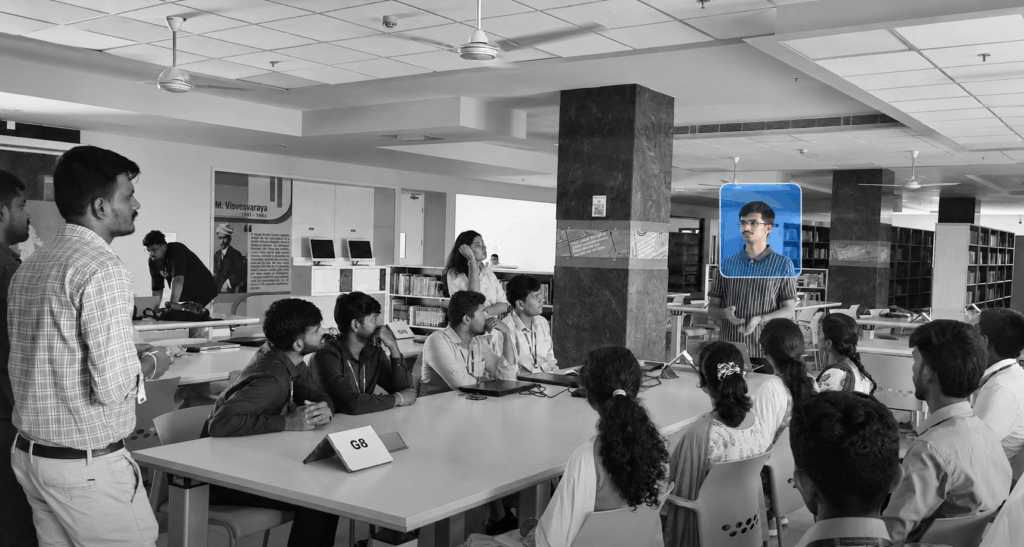
When we partnered with ITW Universe to build a business management platform for agencies, Thammaiah became the sole backend developer on the product. Not the lead of a backend team. The backend team.
That meant owning everything from architecture and implementation to deployments, production support, and long-term evolution. Along the way, he built:
- An access-control model spanning 16+ role combinations with layered visibility. The kind of RBAC problem that makes off-the-shelf CRMs quietly give up.
- A Node.js and MySQL backend designed for reliability, secure data handling, and maintainability—because software lives much longer than its first release.
- Real-time data synchronization over AWS Lambda and WebSockets. In sales, stale data doesn’t just confuse users—it costs opportunities.
- Observability before anyone asked for it: centralized logging through ELK and proactive monitoring with Zabbix. Issues surfaced before users could report them, which is exactly how it should be.
- Automated deployment pipelines that turned releases into a routine rather than an event. The best deployments are the ones nobody talks about the next morning.
He built and evolved all of it with minimal supervision, choosing maintainability over quick fixes every time the two disagreed. He still supports that platform today, years after moving on to bigger challenges—because around here, ownership doesn’t come with an expiry date.
Platform-first, not feature-first
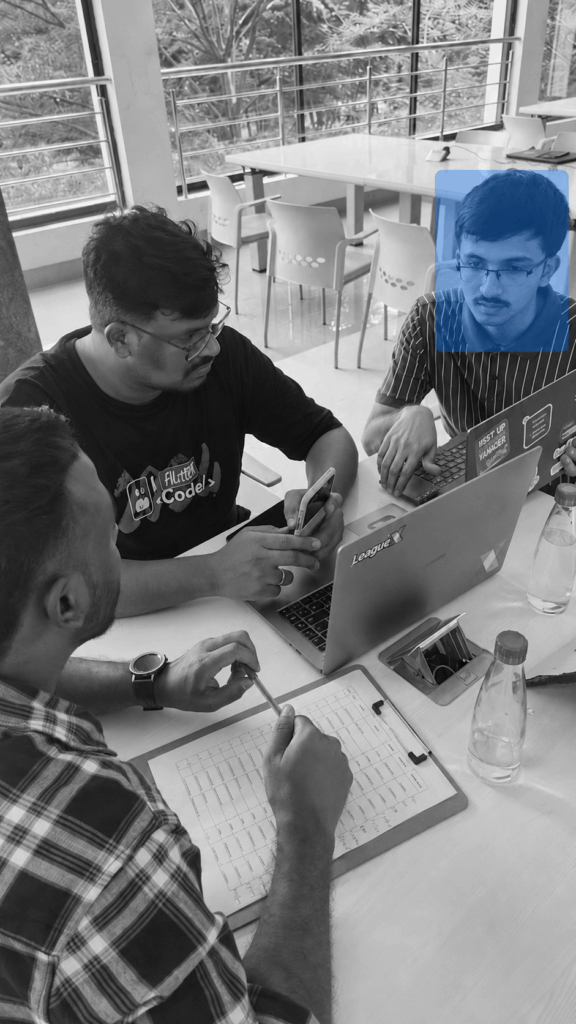
Ask Thammaiah for a feature and you’ll get a question back: what should this look like in two years? This is mildly annoying exactly once. Then you catch yourself asking the same question, and you realize what happened.
Kiran, from our QA team, describes his problem-solving style precisely — he rarely brings just one answer:
“He often comes up with multiple solutions for a single issue and helps identify the most practical one.” - Kiran, QA
That word — practical — does a lot of work. He doesn’t chase new technologies for the sake of it; he evaluates them, understands the trade-offs, and adopts them only when they solve a real problem. Curiosity, with engineering discipline holding the leash. Kishore sees the same thing from inside the engineering team:
“Instead of looking only at the direct path to solve a problem, he considers different approaches, edge cases, trade-offs, and the overall system design.” — Kishore, Engineering
Aditya, who has spent years in the trenches with him, doesn’t bother with understatement:
“Thammaiah is one of the smartest, most intellectual, and philosophical programmers I’ve met in my career. His ability to break down a large, complex problem into smaller, manageable tasks has influenced the way I think about solving engineering problems.” — Aditya, Engineering
Aditya also credits him with a habit that sounds simple and isn’t: solving what can be solved first, instead of stalling on the parts that feel distant. It keeps hard problems moving instead of letting them calcify into meetings.
Scaling up: AdGeist and everything after
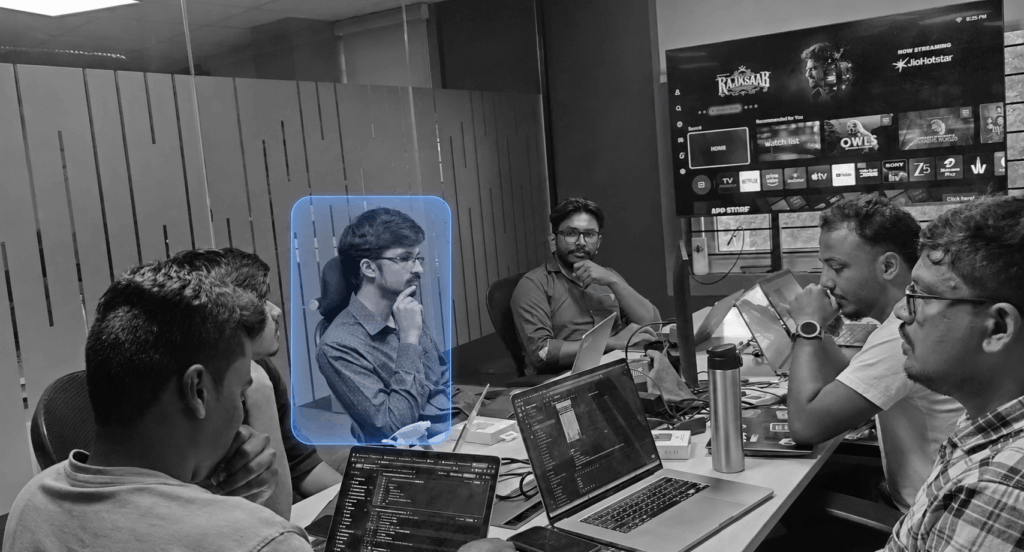
Today he’s one of the primary technical drivers of AdGeist, our AI-native ad operating system. He leads backend engineering for the platform — hands on the keyboard and eyes on the architecture, at the same time, which is rarer than it sounds.
And AdGeist is just the headline. His fingerprints are on CRM, AI Consultant, Cricket Brawl, our assessment platforms, and a string of internal systems. Whenever a project hits a problem that needs depth rather than headcount, the same name comes up. You can guess it by now.
The invisible work
Somewhere between all of that, Thammaiah also took ownership of our cloud infrastructure — reliability, scalability, stability, cost, the works. Nobody applauds infrastructure when it works. That’s the whole point of it working.
He also led our security push, making it part of how platforms get designed instead of a checklist item the week before launch. For a company shipping AI tools, games, and business platforms in parallel, that discipline pays out daily, in incidents that never happen.
Leadership without announcements
Nobody promoted Thammaiah into technical leadership with a memo. Teams just started routing their hardest architectural questions to him, and the answers kept being right. Eventually we updated the title to match reality.
Roshin admired the clarity in how he leads, especially when guiding the team through difficult decisions:
“What stands out is the way he takes the leadership role — clear-cut direction to peers and colleagues. What have I learned from him? How to be a good leader.” — Roshin, Engineering
Cibi noticed something that’s easy to overlook but invaluable in engineering discussions—clarity."The way he speaks is clear, and it only focuses on the discussion's context." — Cibi, Engineering
Whether it’s a design review or a production issue, conversations stay grounded in the problem instead of drifting into distractions.
Rahul’s takeaway is the one we’d frame and hang in the office if he’d let us:
“I’ve learned the value of asking the right questions first and focusing on the root cause before proposing solutions.” — Rahul, Engineering
Akshay boils it down further — confidence and straightforward thinking, and the discipline to “research things deep” and never stop learning. And Kiran notes that whenever QA has backend questions, he patiently explains the concepts instead of gatekeeping them. The bar he holds isn’t a wall; it’s a ladder he keeps handing to people.
He’s in our engineering interviews too, helping us hire people who clear the bar he helped set. His commitment to this is… thorough. At one campus hiring drive, dressed in full formals and looking every bit the strict professor, he took invigilation so seriously that he noted down the register numbers of candidates caught cheating and reported them to the faculty. Friendly mentor to exam-hall enforcer in under an hour. We have not let him forget it, and we never will.
The person behind the systems
We sent the team a feedback form about Thammaiah. Ten people responded. Not one managed to keep it strictly professional, which tells you more about him than any architecture diagram could.
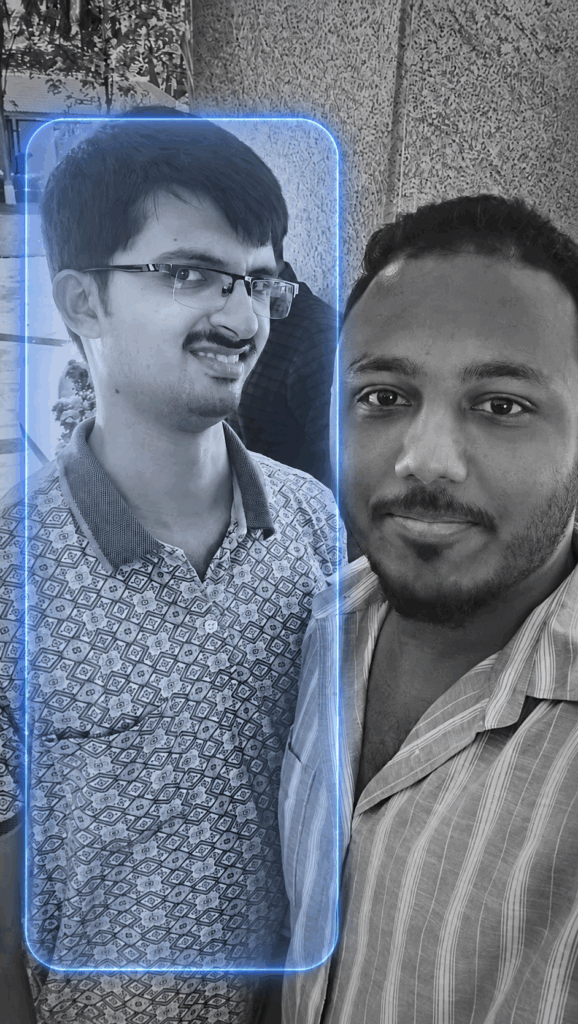
The recurring theme is the reading. Rahul looks forward to the articles he shares because they keep sparking discussions. Aditya has lost entire afternoons to technical conversations with him that “could easily go on for hours,” somehow without ever feeling like a lecture. The man is a one-person engineering book club with a distribution network. Dharshini’s note captures it best:
“He is very studious and has great wisdom. He inspires others through his knowledge and humility. His habit of reading books and articles showed me how learning can change the way we think and grow.” — Dharshini
Then there’s the other side. Akshay’s favorite memories are the random meetings that have nothing to do with work. Roshin’s are the lunch tables where everyone sits and cracks jokes. Aditya adds the card games. Joynal appreciates something bigger — “his perspective on the world, and his effort to find purpose for the betterment of himself and his fellow countrymen” — and also confesses that their office-celebration antics are a joint project of living out school-day mischief, respectfully.
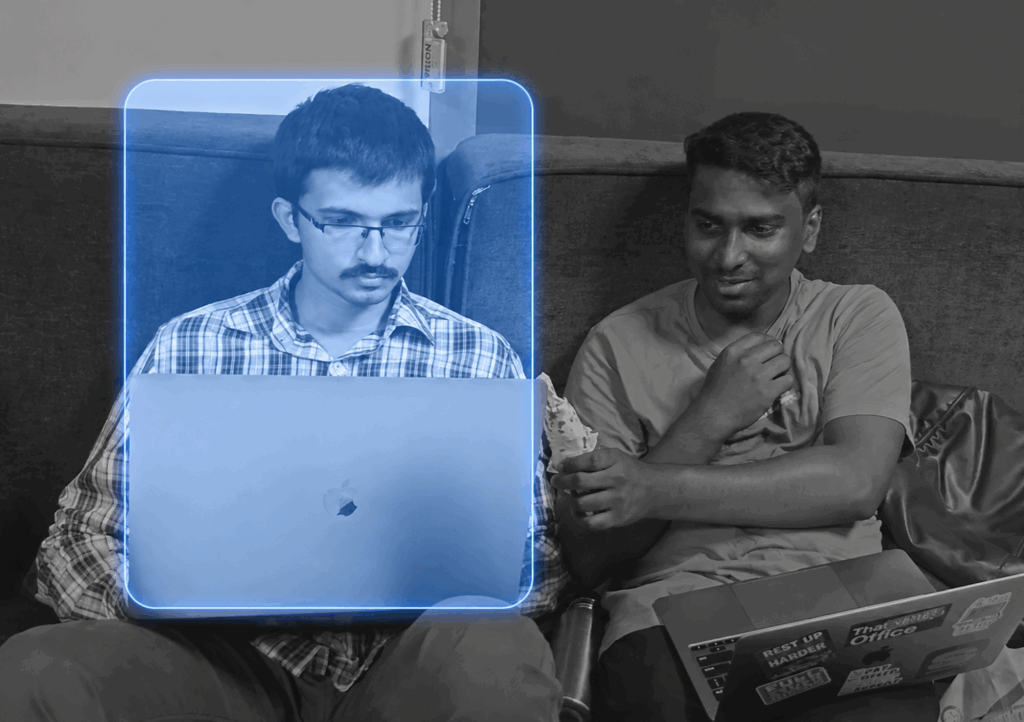
But the finest tribute in the entire form belongs to Joynal, delivered the way engineers deliver affection:
“I’ve learned patience and sheer willpower from having to work with an insufferable person like Thammaiah.”
— Joynal, longtime teammate and clearly a survivor
The grueling part (and why it’s worth it)
We won’t dress this up: working under Thammaiah is not a comfortable ride. Your pull requests will come back with questions you hadn’t thought to ask yourself. “It works” will never end a conversation — he’ll want to know how it behaves at ten times the load, what happens when the network partitions, and why you picked this architecture over the two you didn’t consider. The bar does not move because you’re tired. Joynal wasn’t joking about the willpower.
But ask the engineers who’ve been through it and the math is unanimous: a year working with him is worth several anywhere else. You stop writing code that merely passes review and start thinking in systems — scale before it arrives, security and observability as instincts instead of tickets. The engineers he’s mentored carry that with them everywhere. Some of them even forgive him for the code reviews.
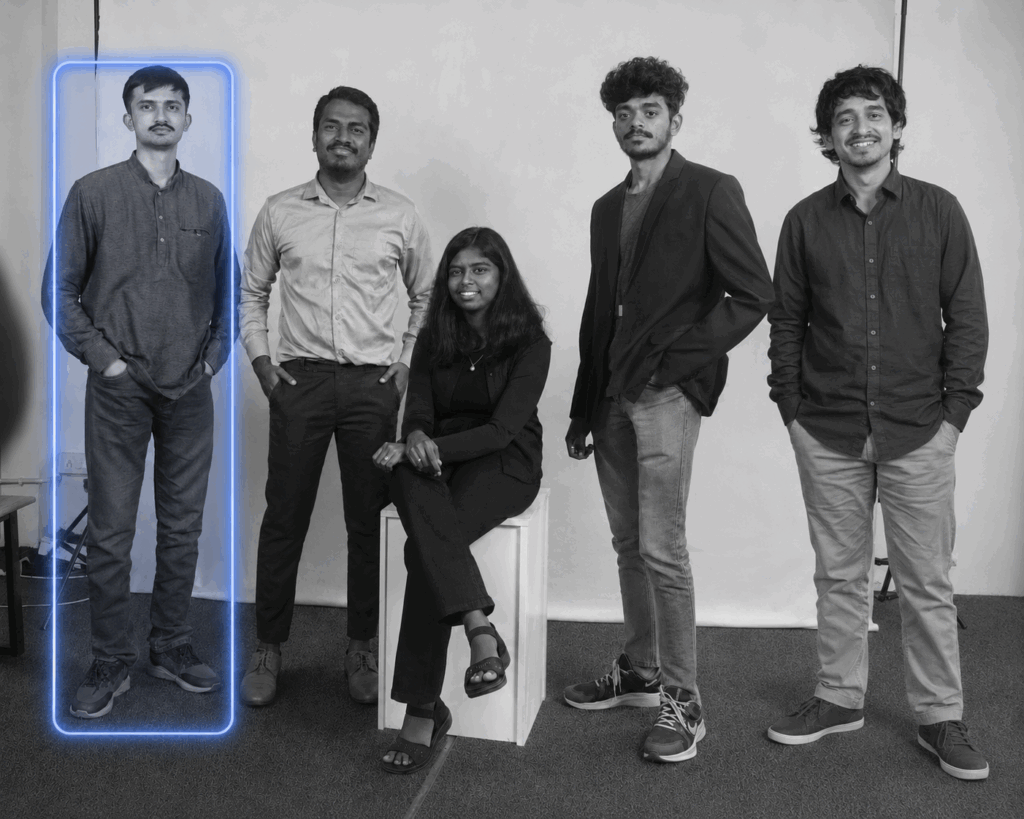
That’s the trade at The Alter Office: demanding work, unforgiving standards, and growth you can’t get anywhere comfortable. For a certain kind of engineer that’s not a warning, it’s the pitch. If you’re that kind, you know where to find us.
What the next three years look like
The road ahead runs through Alter Office Labs: scaling our engineering platforms, driving architecture for whatever we build next, and setting up a skunkworks culture where ideas get prototyped fast, tested hard, and either killed quickly or scaled deliberately. No zombie projects.
The bigger ambition is moving The Alter Office from building features to building category-defining products. That kind of transition is won or lost on foundations — and we already know who lays ours.
If I had to sum up three years in one observation, it would be this:
“Thammaiah has never limited himself to the responsibilities of his role. Whether it’s improving architecture, strengthening security, or raising coding standards, his focus has never been just on shipping code — it’s on building systems and practices that benefit everyone.” — Mugesh M, CTO (yes, the author — it needed saying properly)
Happy three years, Thammaiah. The pull requests await your questions.
Happy Anniversary Thammu 😐